Continuous connectivity applied to smart livestock management
Digitanimal presented its multi-orbit connectivity architecture at the Mobile World Congress (MWC) 2026, demonstrating how the integration of terrestrial and satellite networks enables continuous connectivity for smart livestock management, even in rural and hard-to-cover environments.
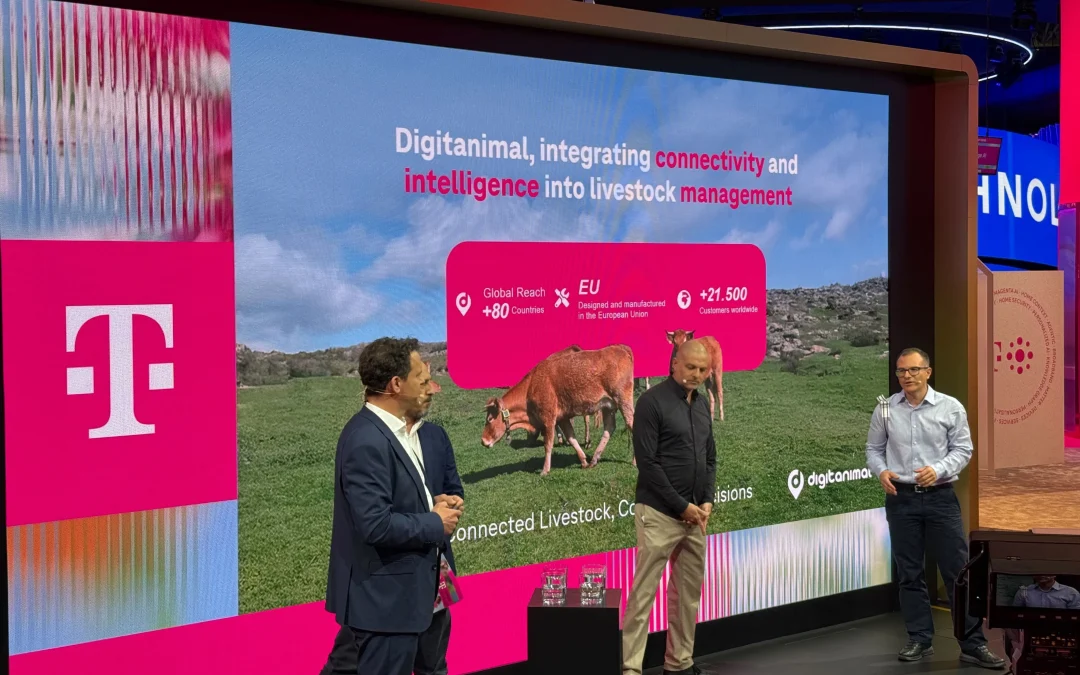
The company participated as a real use case in the Deutsche Telekom session “5G Multi-Orbit Satellite Connectivity for IoT”, where the operator introduced its new global NB-IoT multi-orbit roaming framework.
This architecture integrates terrestrial and non-terrestrial networks (NTN) across different satellite layers, creating a hybrid connectivity model capable of maintaining data transmission from IoT devices in any environment.
How Digitanimal multi-orbit connectivity works
Deutsche Telekom’s multi-orbit approach integrates terrestrial and non-terrestrial networks (NTN) across different satellite layers, including geostationary orbit (GEO) and low Earth orbit (LEO).
This model allows IoT devices to transmit data continuously between mobile networks and satellite infrastructure through a unified roaming system.
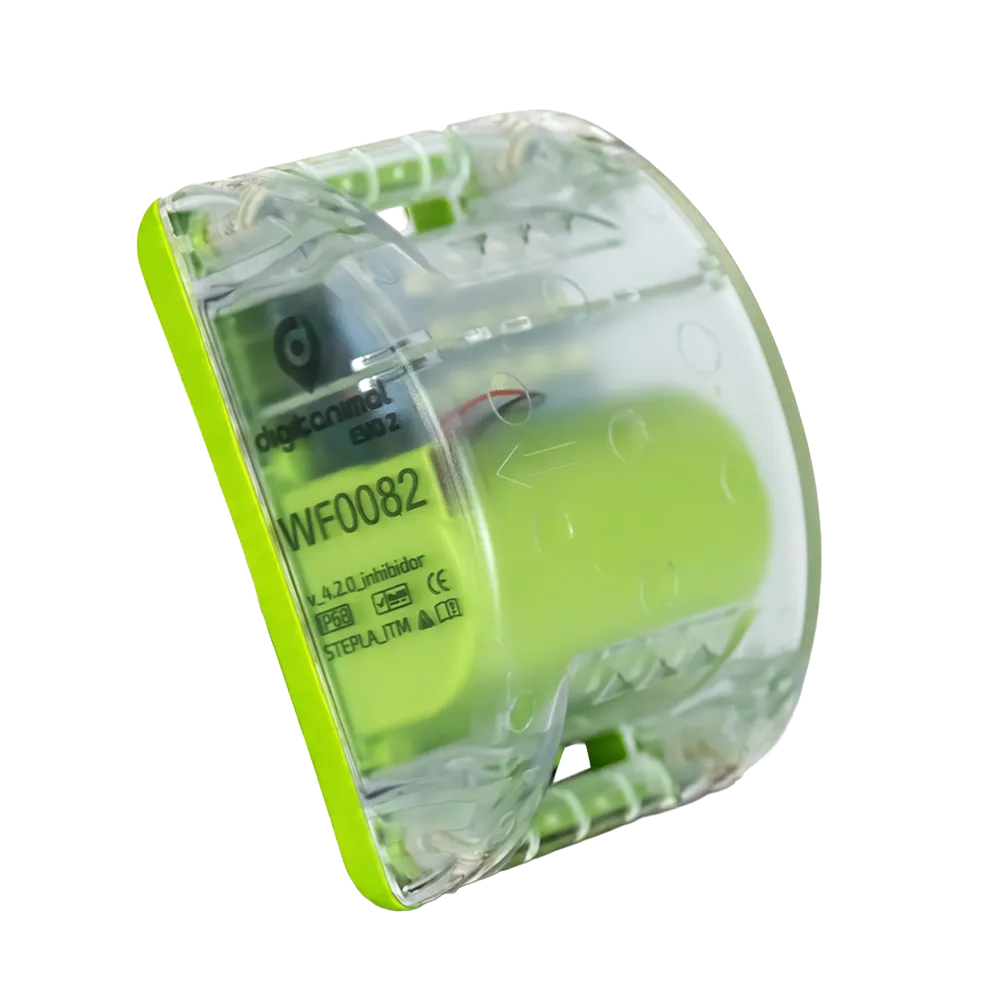
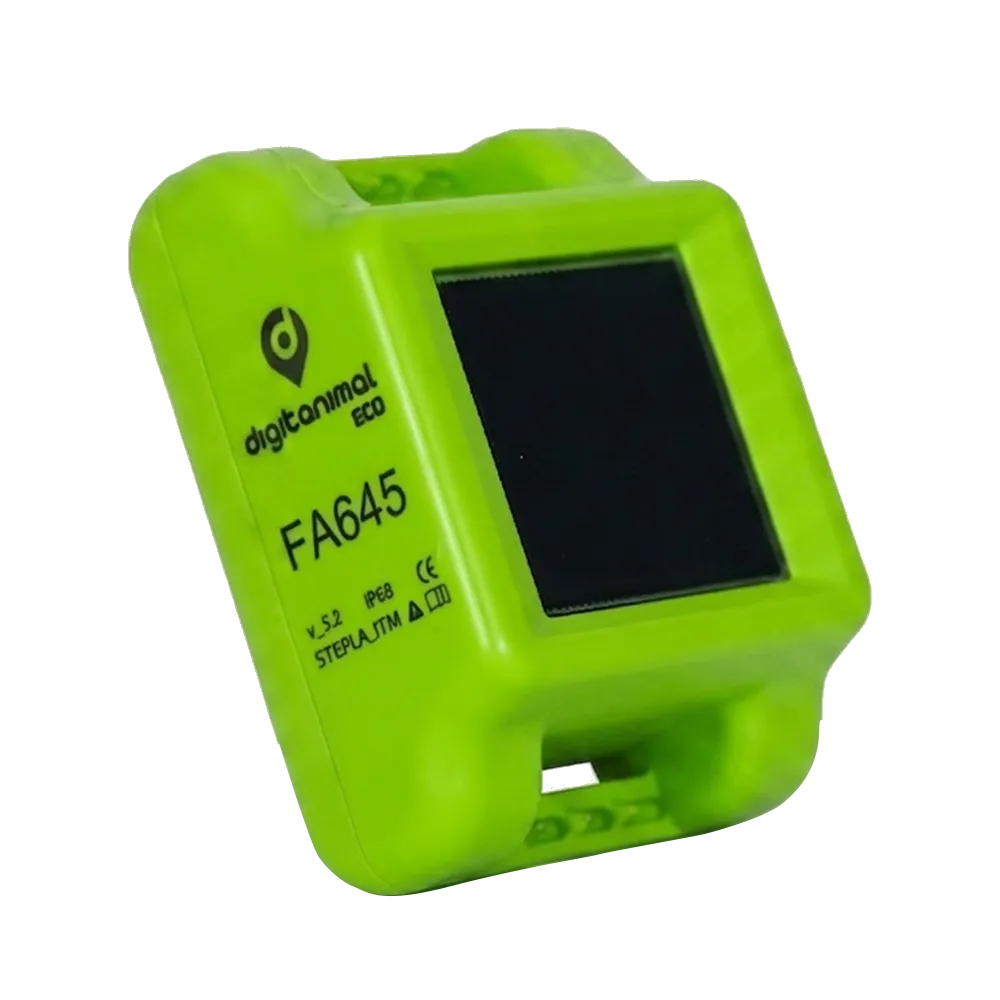
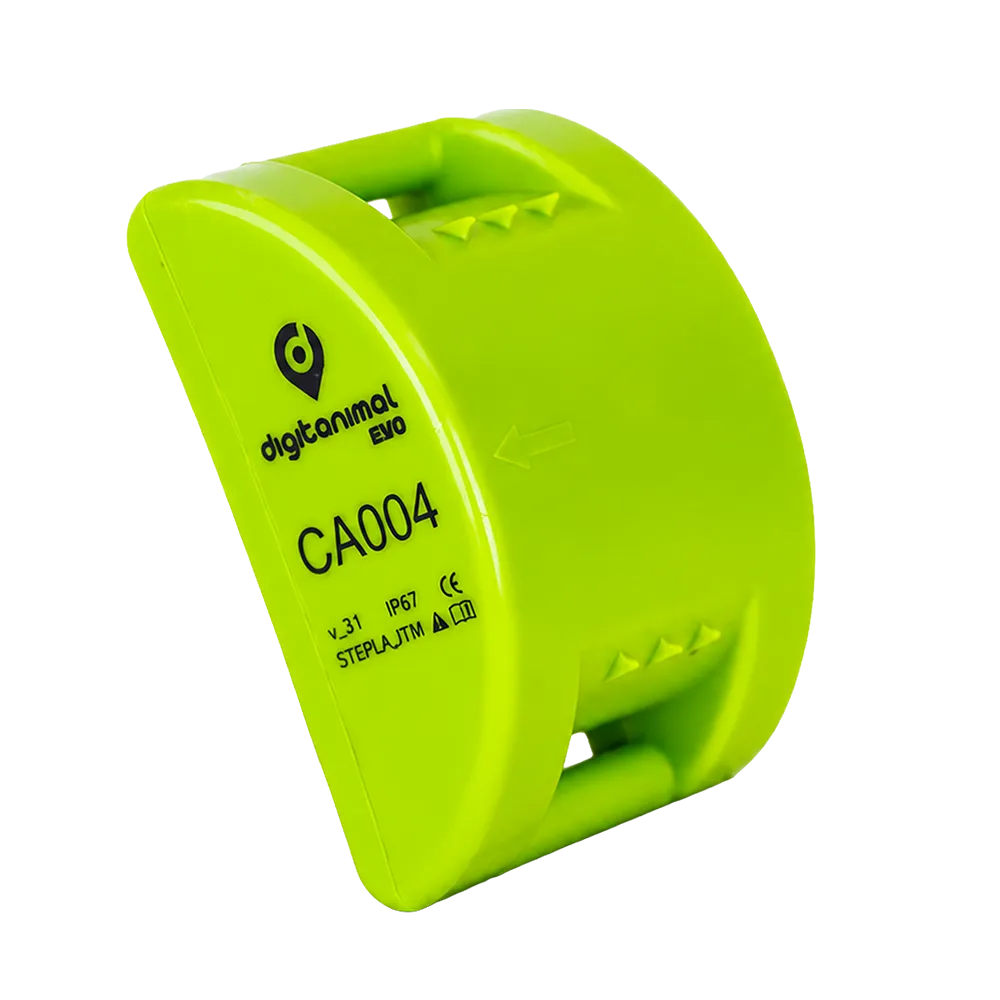
Within this framework, digitanimal has developed its new SAT collar using Deutsche Telekom’s hybrid connectivity model, enabling seamless operation across terrestrial and satellite environments. The device has been developed in close cooperation with Deutsche Telekom IoT and Skylo, combining digitanimal’s expertise in smart livestock monitoring with their connectivity infrastructure and non-terrestrial network capabilities.
Connectivity challenges in extensive livestock farming
As livestock activity expands into increasingly remote and extensive territories, maintaining connectivity has become a structural challenge. Conventional mobile networks do not always guarantee uninterrupted monitoring.
Digitanimal’s multi-orbit connectivity addresses this challenge through a hybrid architecture combining NB-IoT, LTE and satellite capability (NB-NTN) within an integrated system.
Digitanimal’s SAT collar operates on Deutsche Telekom’s NB-IoT network when coverage is available and can automatically switch to satellite connectivity managed by Skylo when terrestrial networks are not present.
The device works seamlessly across terrestrial and satellite networks within a unified connectivity framework, ensuring periodic telemetry transmission — including location and animal activity parameters — without the need for manual intervention.
Scheduled data transmission optimizes energy consumption and adapts to the specific characteristics of NB-IoT devices.
The antenna design integrated into the device was developed by Antennity and recognized by Deutsche Telekom with the award for best IoT antenna design, highlighting its efficiency and integration capabilities in devices designed for advanced IoT connectivity.
The device has completed Skylo’s certification program for non-terrestrial networks (NTN) based on 3GPP standards, with tests carried out by the accredited DEKRA laboratory in Málaga.
This process positions Digitanimal among the first IoT livestock solutions certified within Skylo’s NTN ecosystem.
The current deployment operates on Skylo’s GEO satellite infrastructure and is prepared to evolve within Deutsche Telekom’s multi-orbit ecosystem, which integrates partners such as Skylo, OQ Technology and Sateliot, and anticipates the integration of new satellite constellations in its technological roadmap.
Beyond connectivity, Digitanimal’s modular infrastructure integrates GPS collars, smart livestock scales, virtual fencing and the Datanimal management platform within a coherent architecture.
Animal biometrics, territorial data and operational information are transformed into structured intelligence for technical and economic decision-making.
“In extensive livestock farming, connectivity cannot depend on isolated coverage points; it must guarantee data continuity.
It needs to be resilient, adaptive and continuous. By integrating terrestrial and satellite networks within a unified architecture, we are transforming connectivity into a structural infrastructure that ensures reliable information for livestock management at a global scale.”
— Carlos Callejero, CEO and co-founder of Digitanimal
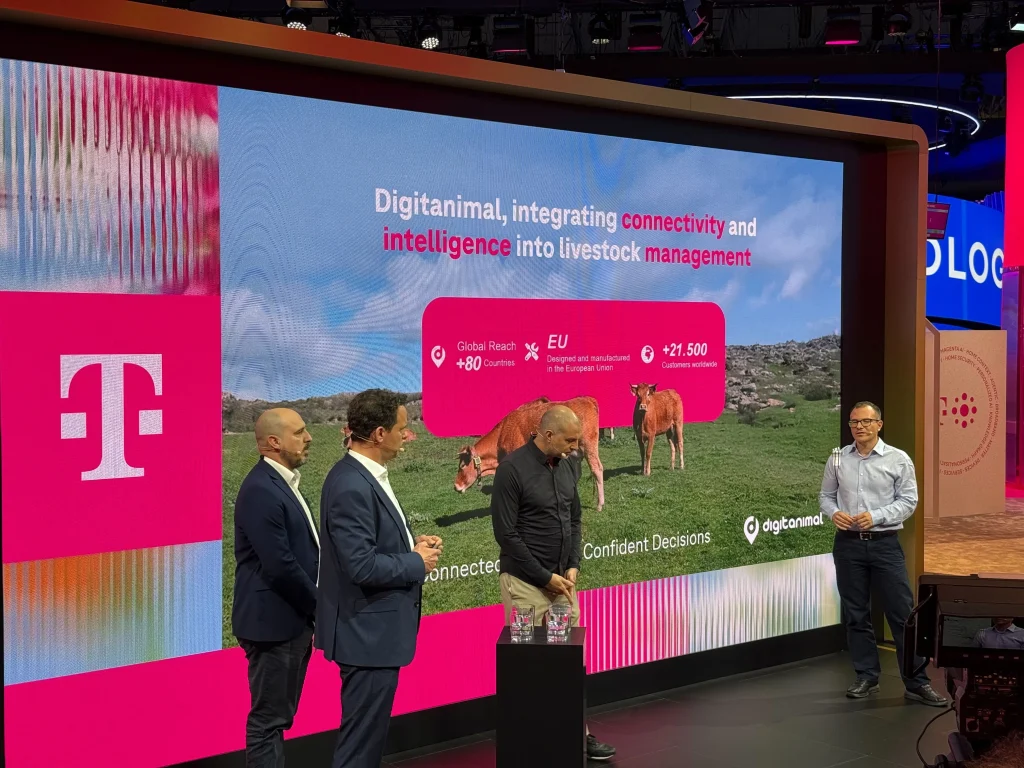
With a presence in more than 80 countries and thousands of connected farms, Digitanimal strengthens its position as a reference company in the digitalization of the livestock sector.
Multi-orbit connectivity represents a structural step forward in rural digitalization. By transforming coverage into an integrated infrastructure rather than a geographical limitation, it enables more resilient, interoperable and scalable livestock management models on a global scale.